 Monobuilt Editorial Teams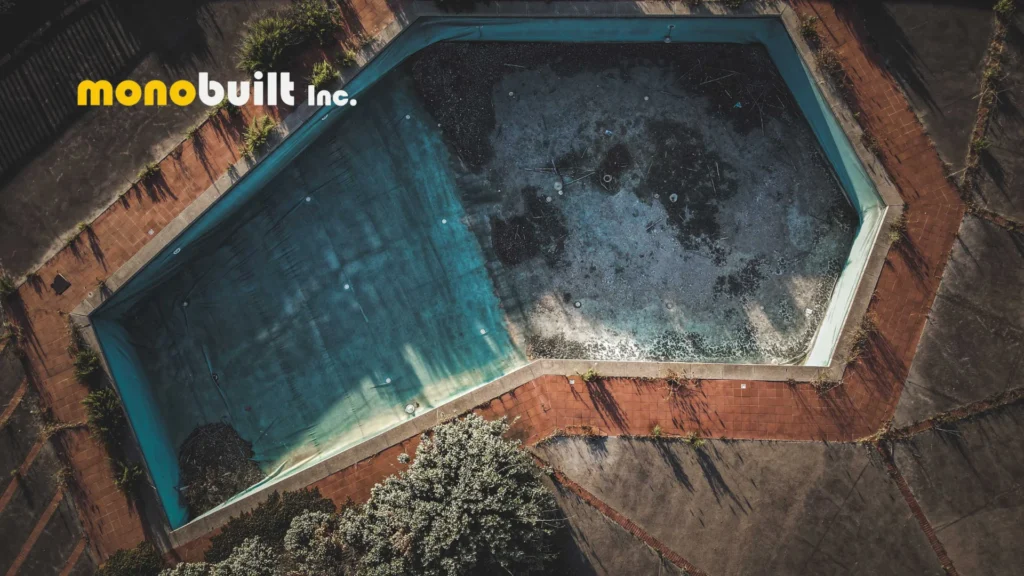
Table of contents
- Why Homeowners Choose Pool Removal in Newmarket
- What Is Involved in the Pool Removal Process?
- Types of Swimming Pools That Can Be Removed
- Complete Pool Removal vs. Partial Pool Removal
- How Inground Pool Removal Works in Newmarket
- What Happens to Pool Equipment and Demolition Debris?
- Backfilling, Soil Compaction and Grading After Pool Removal
- Restoring Your Backyard After Pool Removal
- Reclaim Your Backyard With Professional Pool Removal
- Pool Removal in Newmarket: FAQs
An old swimming pool can take up loads of space in your backyard. If you’re no longer using it, you might start to wonder if it’d be better to turn that space into a lawn, garden, patio, or outdoor area. Not having to deal with an unused pool can also reduce the workload when it comes to keeping your yard looking its best. For loads of homeowners in Newmarket, pool removal is a pretty straightforward way to make better use of their property.
The job is generally more than just ripping out the pool – a contractor could need to tackle pool demolition, excavation, hauling away debris, and hauled the lot off. Once that’s done, the open area is filled with the right material, compacted and levelled to create a stable surface.
We’re going to take a look at the pool removal process, the different types of pools, what permits you might need, and what to look out for when hiring a pool removal contractor in Newmarket.
Why Homeowners Choose Pool Removal in Newmarket
A backyard pool might’ve seemed like a great idea when you first bought your place, but your needs can change a lot over time. If your pool isn’t getting the use it once was, it might be just sitting there, taking up space that could be used for something a lot more useful. Loads of homeowners choose to yank out an old pool so they can enjoy a more spacious and open yard.
Keeping an older pool can also mean dealing with a ton of repairs, cleaning and pool equipment that needs regular care. If your pool has started to feel like more hassle than fun, it might be time to rip it out.
For some homeowners, in Newmarket, removing a pool is part of a full-on backyard renovation. Once the space is open again, you can use it for a lawn, garden, some seating area, or other property makeover. This gives you a chance to recast the backyard to suit how you actually live in your home day to day.
What Is Involved in the Pool Removal Process?
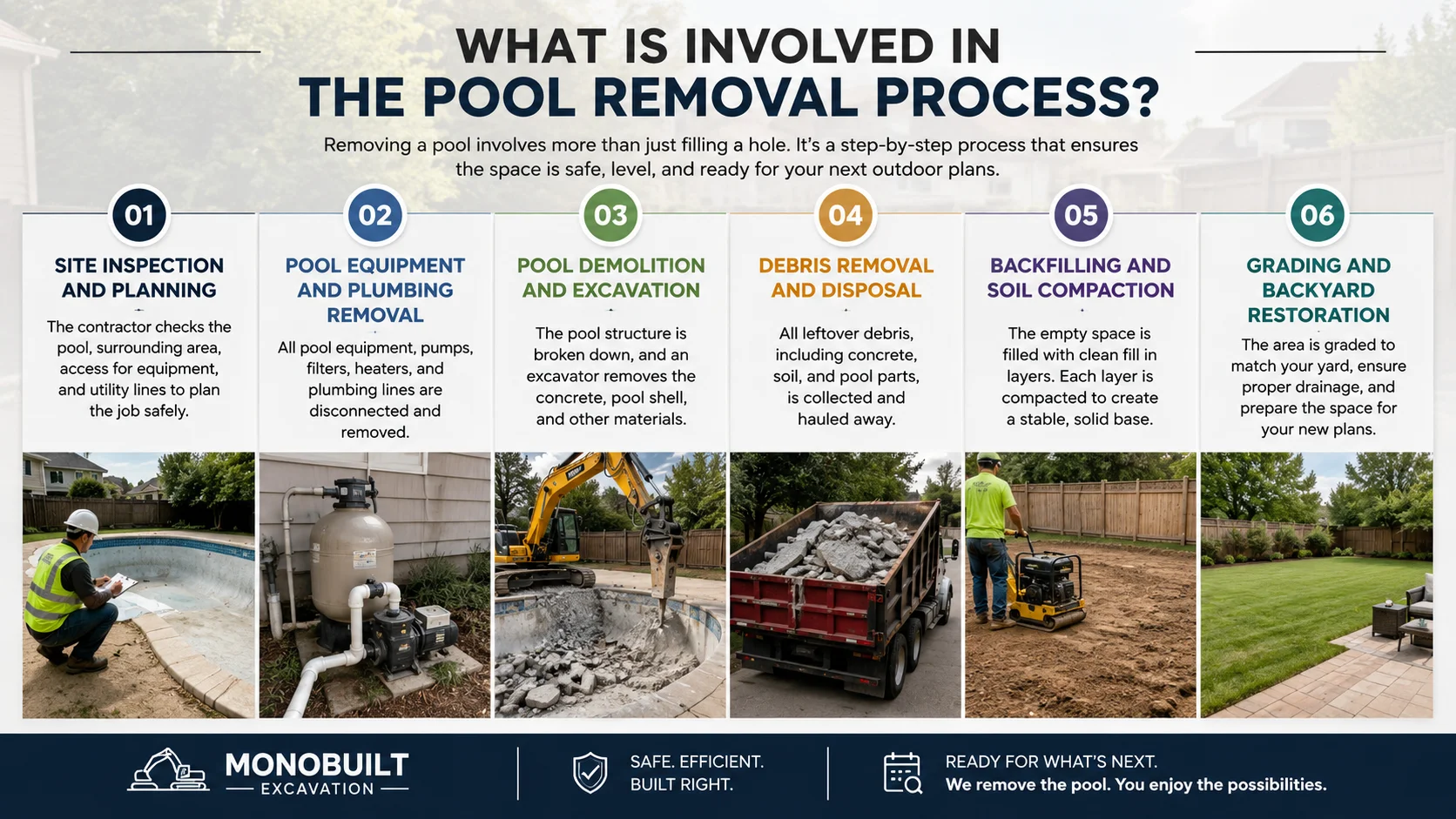
Removing a pool is way more than just taking it out of the ground. The area needs a good going over, clearing out any debris, filling it in and getting it ready for the next use. A typical pool removal process is a pretty simple affair, involving just a few basic steps from checking the site to sorting out the yard at the end.
Site Inspection and Planning
First, the contractor checks the pool and the area around it. They look at how big the pool is, how deep it is, any nearby buildings, and space for an excavator to get at work. They also do a double check for utility lines before starting the job – it’s just basic safety really.
Pool Equipment and Plumbing Removal
Before they start the main work, they’ll grab the pool pump, filters and other pool gear. Getting that stuff out of the way tends to make it easier to get on with the job.
Pool Demolition and Excavation
Next up, the pool structure gets broken down and cleared away: a concrete pool, for example, might need to be chipped out into smaller bits before they can take it away. An excavator can be a big help with getting rid of the broken concrete, pool shell and all the other gunk that’s been left behind.
Debris Removal and Disposal
When a pool is taken out, there’s often a whole lot of junk left over like concrete, dirt, broken pool parts and general construction debris. We collect all this stuff and haul it away from the property. Having it all tidied up after the removal makes it a lot easier to get on with the next phase of the job.
Backfilling and Soil Compaction
Once the pool is gone the empty space needs filling. We then add in clean fill in layers, then compact each layer to make sure the soil is packed down tight.
Grading and Backyard Restoration
We also shape the space to make it match the rest of the yard. Proper property grading also makes sure water drains properly and doesn’t just sit there. After this, your backyard is ready for a lawn, garden, patio or whatever other outdoor space you want to create.
Types of Swimming Pools That Can Be Removed
Of course, not all pools are created equal and the way you remove them can be different depending on the type of pool you have. The pool material, size and the space it’s in can all make a difference in the job we do. A contractor can take a look at the pool and then decide on the safest way to remove it.
Concrete Pool Removal
A concrete pool is pretty tough so we often have to use a bit more heavy equipment to break it up. We then scoop it all up and dispose of it properly.
Fiberglass Pool Removal
A fiberglass pool has a big pool shell stuck in the ground and we need to dig up the soil around the shell to be able to lift it out safely. Once we’ve got the shell out of the way we can then come back and clean the empty area and get it ready for filling.
Vinyl Liner Pool Removal
A vinyl liner pool is a bit different – it’s got a soft liner on a supporting frame. We remove the liner first then the frame and any other bits that were part of the pool. Once we’ve got all that cleared out the empty space is ready to be filled and prepared for the next stage of the work.
Complete Pool Removal vs. Partial Pool Removal
When you’ve got an old inground pool you’ve got a couple of options – full removal or partial removal. The choice is really going to depend on the pool, your yard and what you want to do with the space in the future.
| Complete Pool Removal | Partial Pool Removal |
|---|---|
| The whole pool structure is removed. | Only part of the pool is removed. |
| The area is cleared of pool materials and demolition debris. | Some parts of the old pool stay underground. |
| It may need more excavation and heavy equipment. | It may need less digging and removal work. |
| The empty area is filled with suitable clean fill. | The remaining pool area is filled and covered. |
| The ground can be compacted and graded for future use. | The future use of the space may be more limited. |
| It is a good choice when you want to fully reclaim backyard space. | It can be useful when full removal is not needed. |
Before you can make a decision, it’s a good idea to have the pool and backyard checked out by a qualified contractor. They can take a look at the pool type, the state of the site, access to the pool and what you’re planning to do with the space later on.
How Inground Pool Removal Works in Newmarket
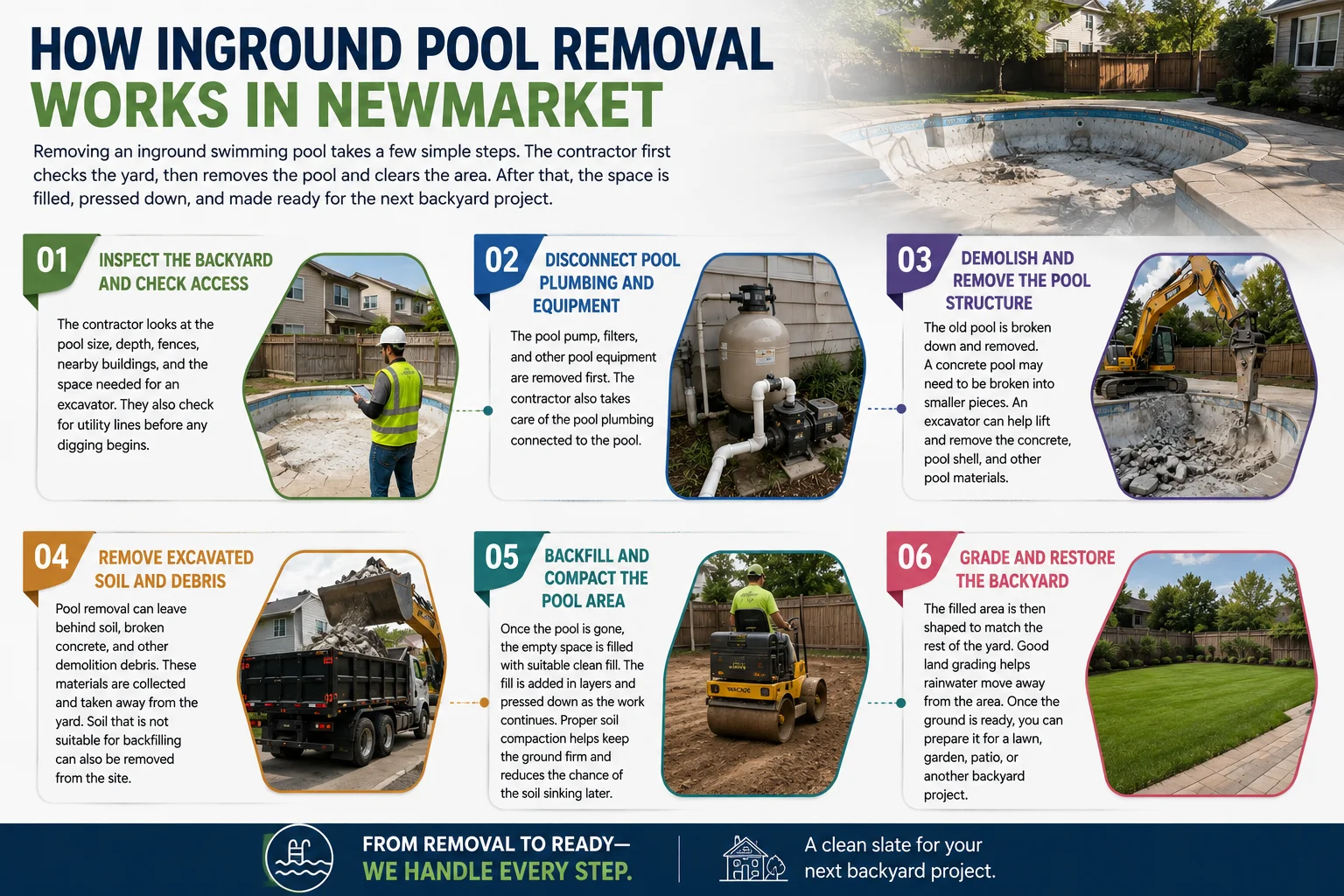
Removing an inground pool isn’t a complicated process. The first thing the contractor has to do is check out the yard, remove the pool and get the area clear. After that the space is filled in, compacted and made ready for whatever you want to do with it next.
Inspect the Backyard and Check Access
The contractor needs to look at the pool size, depth, fences, nearby buildings and how much space there is to work in. They also need to check for any utility lines before they start digging.
Disconnect Pool Plumbing and Equipment
Then they go in and remove the pool pump, filters and all the other equipment. While they’re at it they also take care of the pool plumbing so that it’s all clear before they start on the removal proper.
Demolish and Remove the Pool Structure
Next up, the old pool gets taken down and hauled away. A concrete pool has to be smashed into smaller chunks first – and an excavator can be a big help getting all that concrete, pool shell and other pool junk out of the ground.
Remove Excavated Soil and Debris
When a pool comes out, it’s usually left behind with a pile of dirt, broken concrete, and all sorts of other debris. This stuff gets scooped up and carted off the yard. If the soil isn’t good enough to put back in the hole, it can get hauled away too.
Backfill and Compact the Pool Area
Once the old pool is gone, the empty space gets filled up with some fresh, clean dirt. The dirt is layered on in small chunks and tamped down bit by bit as the job gets done. The key is to get the dirt as firm as possible, so it doesn’t just sink in later on.
Grade and Restore the Backyard
With the ground ready, you can start prepping it for a new lawn, garden or patio – or whatever other project you’ve got in mind for the backyard.
What Happens to Pool Equipment and Demolition Debris?
But removing a pool leaves behind a lot more than just dirt. You’ve got to deal with all the old pool equipment, pipes, concrete and other junk that’s still lying around. Get rid of all that stuff and the work area stays nice and tidy, and you make room for the next steps.
The pool pump, filters, pipes and all that equipment get yanked out before or during the pool removal. Some of this stuff gets hauled off to get disposed of proper-like – while other bits might be able to be salvaged by the homeowner.
When doing pool demo, you’ve got to collect up all the broken concrete, bits of pool, and all the other construction junk that’s getting in the way. The contractor loads it all up for hauling away, and that includes any unwanted dirt or other trash that’s not going to be used to backfill.
Getting rid of all this useless material is important, though – leaving all that broken stuff in the ground can cause a whole heap of problems down the line. Once the unwanted junk is cleared out, the area is ready for filling it up, getting the dirt nice and firm, and shaping it up to blend in with the rest of the yard.
Backfilling, Soil Compaction and Grading After Pool Removal
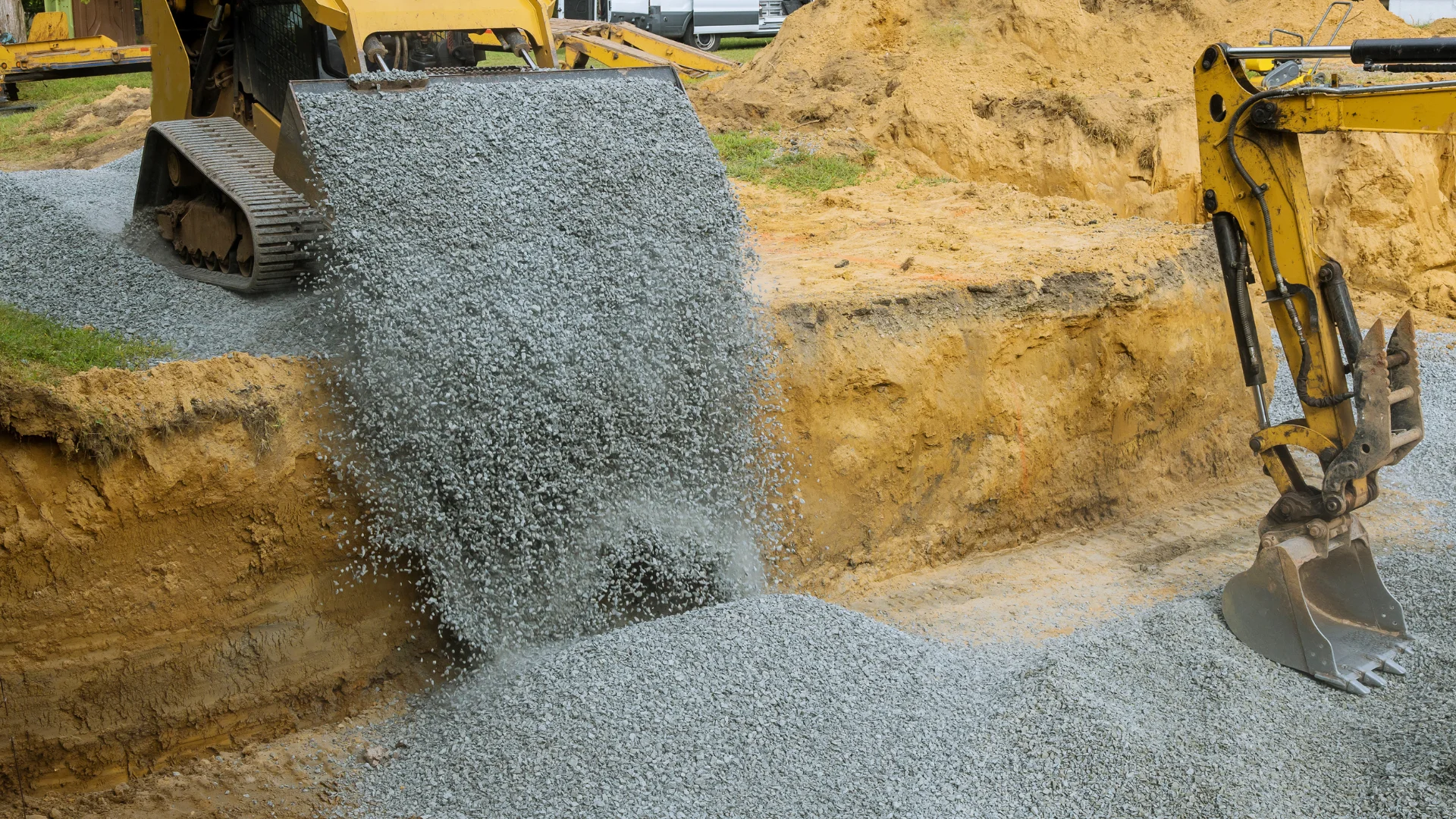
Once the pool is out of the way, it’s time to fill the empty space up and get it nice and firm. This is the first step to getting the yard ready for a new lawn, garden, patio, or whatever else you’ve got on the books.
Backfilling the Former Pool Area
The empty pool area gets filled in with fresh, clean dirt – and the dirt is carefully placed until the area is almost up to the level of the rest of the yard. Getting the dirt right is key, because it’s the foundation for all the work that comes next.
Compacting the Fill Material
It gets done in small layers, and each layer gets pressed down good and firm. That’s called soil compaction, and it stops the dirt from just sinking in later on. Properly getting the dirt down also gives you a good solid base to work from.
Grading the Backyard for Proper Drainage
After that, the ground gets shaped up through land grading. The goal is to get the water to flow off the old pool area – and good grading stops it from just collecting there and sitting around. That gets the yard ready for new landscaping, and leaves it looking better than ever.
Restoring Your Backyard After Pool Removal
Once the pool has finally been taken away the backyard starts to feel like a normal yard again. You can use that open space to create a lawn, garden, patio or just plain another hangout spot – the choice is yours, it all comes down to how you see yourself using your yard.
Restoration of the area can include adding fresh topsoil, planting some grass or getting the whole ground sorted so you can plant new flowers. If you want something simple you can just turn the old pool spot into a lawn and enjoy having a bit more space.
Good restoration of the old pool area also means it ends up blending in with the rest of the backyard pretty nicely. Once the ground is ready to go you can move on with your landscaping plans and make better use of the space.
Reclaim Your Backyard With Professional Pool Removal

An old or unused pool just has to take up valuable space in your yard no more. With the right help from a pool removal in Newmarket you can clear out the old pool, get the dirt ready & make room for a lawn, garden patio or whatever else you want to do out the back.
Monobuilt can help with the bulk of the work, from knocking down the old pool to hauling the debris away to backfilling, soil compaction & grading it all. Our team can help you get the old pool area sorted for its next use.
If you are ready to get rid of that unwanted pool and use your backyard more effectively, contact Monobuilt today to get the ball rolling on your pool removal project in Newmarket.
Pool Removal in Newmarket: FAQs
-
What permits do I need for pool removal in Newmarket?
For filling in an in ground swimming pool in Newmarket, the town says you don’t need a demolition permit but you do need to check with them before making any big changes to the grading of your property – that and you should keep an eye out for utility lines & other local rules.
-
How long does pool removal take?
The time it takes to remove a pool depends on what size it is, what type of pool it is, how easy it is to get to, and just how much rubbish is going to be removed. A small pool which is easy to get to might be a quicker fix than a large concrete pool. How much excavation, removal, hauling, backfilling, & grading needs doing also affects how long the job will take.
-
What happens during a concrete pool demolition?
During a concrete pool demolition, the concrete is broken up into smaller bits and then removed. All the broken up material is collected with the rest of the demo rubbish and taken away to be disposed of properly. Once the old concrete and all the unwanted stuff is cleared out of the way, the area can be prepared for backfilling and to get the soil all compacted.
-
Can I turn my old pool area into a lawn?
Yes, an old pool area can be turned into a lawn after a proper pool removal – all the space needs to be filled in properly and then pressed down hard. Once the ground is all ready, some new topsoil and grass can be added and you’ve got yourself a new lawn.
-
What’s the difference between complete and partial pool removal?
A complete pool teardown, removes the main pool structure right from the ground. With a partial removal though, you can end up with parts of the pool still underground once the thing’s been broken down. With complete removal you’ve got a lot more freedom for any future yard work, whereas partial removal leaves you with some limits on how you can use the area.
-
Do you need an excavator for pool removal?
Yes – an excavator is often a key tool in in ground pool removal & excavation work. It really helps smash and remove the concrete, haul out pool materials and clear soil from the site. What size excavator you need of course depends on how easy it is to get the equipment into your backyard & the size of the pool itself. A contractor should always check out the site first before he decides what equipment to use.
-
Why is grading important after pool removal?
Once the pool area is filled in and compacted, the contractor needs to shape the ground to match the rest of the yard. That property grading means the rainwater will be able to flow away from the filled in area instead of collecting there – and it gives you a smooth base to work with for lawn work, landscaping or any other backyard project.

Monobuilt Editorial Teams
The Monobuilt Editorial Team creates clear, reliable content about excavation and construction projects across Toronto and the GTA. Our articles are based on industry experience and reviewed by excavation professionals to help homeowners, builders, and contractors make informed decisions about site preparation, foundation excavation, grading, trenching, demolition, and heavy equipment services.