 Monobuilt Editorial Teams
Table of contents
- Why Proper Site Preparation Matters Before Building
- Complete Site Preparation Checklist Before Building in Thornhill
- Essential Surveys, Tests and Permits Required Before Site Preparation
- Common Site Preparation Mistakes That Delay Construction
- Safety, Regulations and Best Practices for Site Preparation
- What Affects the Cost of Site Preparation in Thornhill?
- Choosing the Right Site Preparation Contractor in Thornhill
- Why Choose Monobuilt for Site Preparation in Thornhill?
- Common Questions About Site Preparation in Thornhill
Building a new home or a commercial property is exciting but one little mistake, before construction even starts , can end up costing you thousands of dollars and add weeks of delays. So having a site preparation checklist is not only helpful, it’s also one of the smartest ways to keep your whole project moving, right from the very beginning.
In this guide, we’ll walk you through every important step before construction starts from surveys and permits to excavation, grading and site readiness. When you are building in Thornhill for the first time or managing a larger project, this checklist will help you prepare your property the right way and avoid costly surprises later.
Why Proper Site Preparation Matters Before Building
Every successful construction project starts with good planning. Before the first shovel goes into the ground, the land needs to be checked, cleared and prepared. Following a proper site preparation checklist helps create a safe, stable base for your new home or commercial building.
Skipping or rushing this stage can lead to costly problems later. Poor soil, drainage issues, hidden utility lines or an uneven site can delay construction and increase your budget. Taking care of these issues early helps your project move forward with fewer surprises.
It Creates a Strong Foundation
A strong building starts with solid ground. Proper site preparation includes soil testing, excavation and grading to make sure the foundation has the support it needs. This helps reduce the risk of settling, cracks and other structural problems.
It Saves Time and Money
Finding problems before construction begins is always easier and less expensive than fixing them later. A well-planned construction site preparation process helps avoid delays, extra work and unexpected costs.
It Helps Protect Your Property
Preparing the site also means planning for proper drainage and checking underground utilities before excavation starts. These steps help protect your property and make the construction process safer and more efficient.
It Keeps Your Project Moving
When the site is ready, builders can start work with confidence. Proper building site preparation service helps every stage of construction run more smoothly from foundation excavation to the final build.
Complete Site Preparation Checklist Before Building in Thornhill
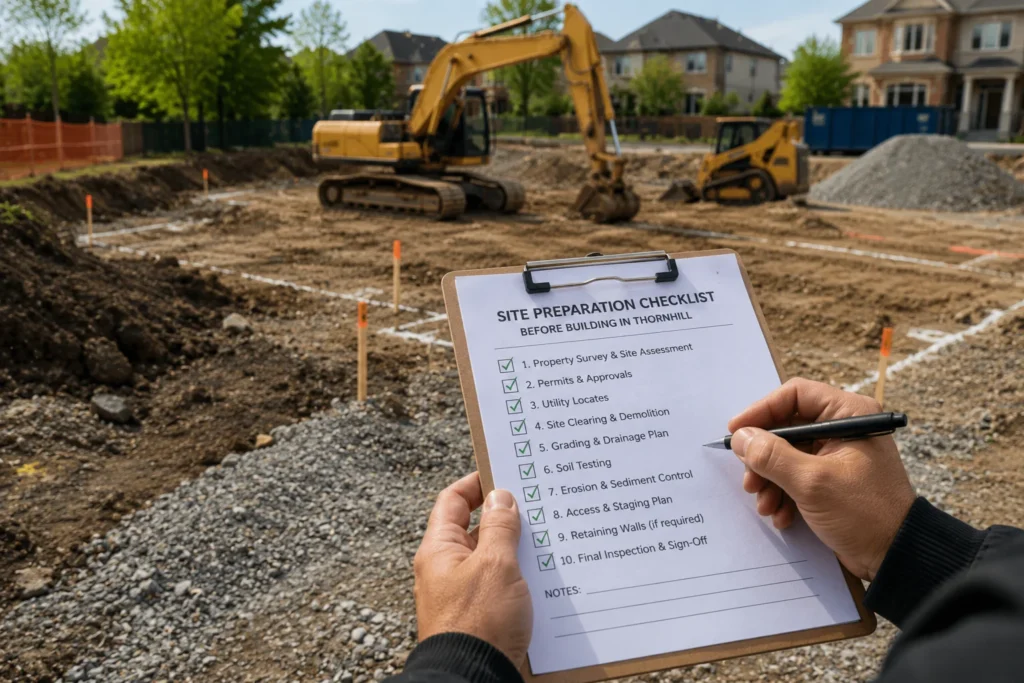
Every property is different, but the basic steps are normally the same. Following this site preparation checklist can help you avoid delays, reduce unexpected costs and make sure your land is ready before construction begins.
1. Confirm Your Property Boundaries
Start with a property survey to confirm the exact lot lines, easements and building setbacks. This helps prevent mistakes and keeps your project within legal property boundaries.
2. Test the Soil
A soil test shows whether the ground is strong enough to support the building. It can also identify drainage issues, poor soil conditions or groundwater that may affect the foundation.
3. Get the Required Permits
Before work begins, make sure you have the required building permits and approvals. Starting without the proper paperwork can delay your project and lead to costly penalties.
4. Locate Underground Utilities
Always locate underground gas, water, sewer, hydro and communication lines before excavation starts. This helps protect workers, prevents damage and keeps the project safe.
5. Clear the Site
Remove trees, brush, old structures, concrete, rocks and other debris that could get in the way. A clean site gives excavation crews safe and easy access to the work area.
6. Complete the Excavation
Once the site is clear, excavation can begin. Depending on the project, this may include foundation excavation, basement excavation or digging for underground services.
7. Install Underground Utilities
If your project needs new water, sewer, drainage or electrical lines, this is the right time to install them before the ground is backfilled.
8. Grade and Compact the Site
Proper grading helps direct water away from the future building, while soil compaction creates a firm and stable surface for construction.
9. Complete a Final Site Check
Before the foundation work starts, inspect the site one last time. Make sure the excavation, grading, drainage and utility work are complete so construction can move ahead without unnecessary delays.
Essential Surveys, Tests and Permits Required Before Site Preparation
Before any excavation or land work begins, it’s important to complete a few checks and get the right approvals. These steps help avoid delays, protect your property and make sure your site preparation project starts the right way.
Property Survey
A property survey shows the exact boundaries of your lot. It also identifies easements, rights of way and building setbacks. This helps you avoid building too close to neighbouring properties or outside your legal property lines.
Topographic Survey
A topographic survey maps the natural features of your land, including slopes, elevations, trees and existing structures. Builders and excavation contractors use this information to plan grading, drainage and foundation work.
Soil Testing
A soil test checks the condition and strength of the ground. It helps identify soil types, groundwater levels and any issues that could affect the foundation. This information allows the right excavation and construction methods to be used.
Utility Locates
Before digging, all underground utilities should be marked. This includes gas, hydro, water, sewer and communication lines. Locating these services helps prevent damage, keeps workers safe and reduces the risk of costly repairs.
Building Permits
Most construction projects in Thornhill require permits before site preparation for construction can begin. Permit requirements depend on the type and size of the project, so it’s important to check with your local municipality before starting work.
Engineering Plans
Some projects also require engineering drawings or grading plans. These documents help confirm that the excavation, drainage and foundation work meet local requirements and support a safe, well-planned construction project.
Common Site Preparation Mistakes That Delay Construction
Even with a good site preparation checklist, small mistakes at the beginning can lead to bigger problems later. Taking the time to plan each step properly can help keep your construction project on schedule and avoid unnecessary costs.
Skipping Soil Testing
Building without checking the soil can lead to foundation problems later. A simple soil test helps identify weak ground, poor drainage or other conditions that may need to be fixed before excavation begins.
Starting Work Without Permits
Beginning site preparation without the required permits can stop your project immediately. It may also lead to fines and delays while approvals are completed.
Ignoring Underground Utilities
Digging before underground utility lines are located can damage gas, water, hydro or communication services. This creates safety risks and can add unexpected repair costs to your project.
Poor Drainage Planning
If water is not directed away from the building, it can collect around the foundation after heavy rain. Proper grading and drainage planning help protect the property and reduce future water problems.
Hiring an Inexperienced Excavation Contractor
Not every contractor has the right experience or equipment for site preparation for construction. Poor excavation or grading work can lead to delays, extra repairs and higher costs as the project moves forward.
Rushing the Preparation Process
Trying to save time by skipping important steps always has the opposite effect. Completing surveys, testing, excavation, grading and inspections in the right order helps the project move ahead with fewer interruptions.
Safety, Regulations and Best Practices for Site Preparation
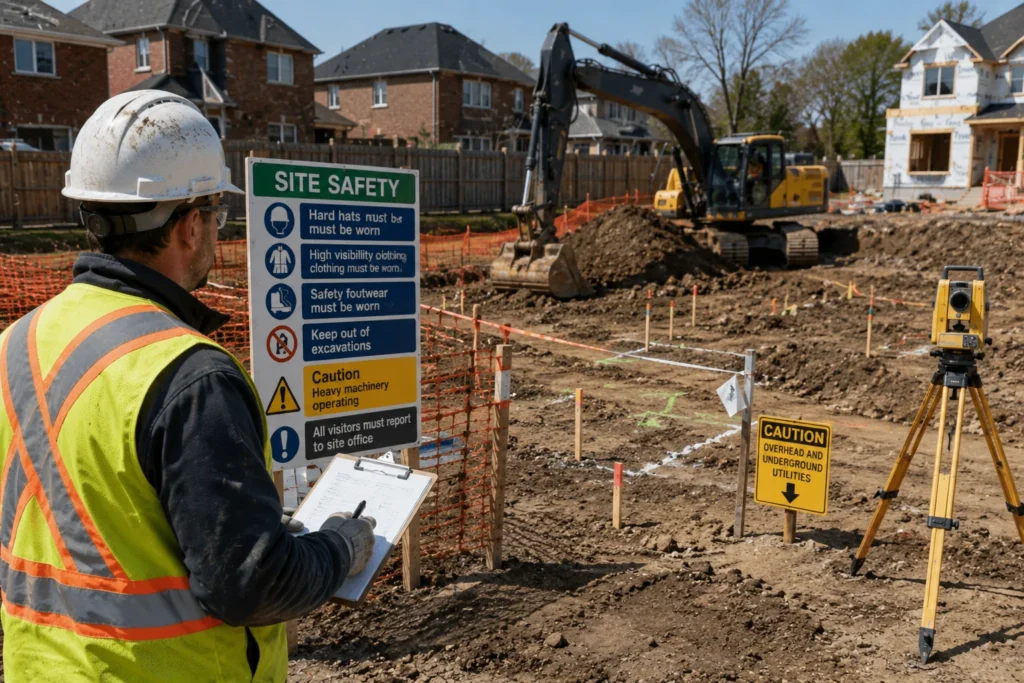
Safety should always come first during site preparation. Following local regulations and proven construction practices helps protect workers, nearby properties and your investment. It also helps keep your project running smoothly from start to finish.
Locate Underground Utilities Before Digging
Before any excavation begins, underground gas, hydro, water, sewer and communication lines should be identified. Digging without utility locates can damage essential services, create safety hazards and stop work until repairs are completed.
Follow Local Building Requirements
Every construction project must meet local building rules and permit requirements. Depending on the project, you may also need inspections or approved engineering plans before moving to the next stage of construction.
Protect Nearby Properties
Excavation work should be planned carefully to avoid affecting neighbouring homes, driveways, fences, trees or underground services. Taking the right precautions helps prevent damage and keeps the project safe for everyone nearby.
Control Water and Soil Runoff
Rain can wash soil away from the work area if the site is not managed properly. Good drainage planning and erosion control help keep the property clean, reduce environmental impact and prevent unnecessary problems during construction.
Work With an Experienced Excavation Contractor
A professional contractor understands the right steps for site preparation for construction from planning and excavation to grading and final site readiness. Experienced crews also follow safety standards and use the right equipment to complete the work efficiently.
What Affects the Cost of Site Preparation in Thornhill?
The cost of site preparation depends on the amount of work needed before construction begins. Things like the size of the property, soil conditions, excavation, grading and utility work all play a role. Every site is different, so the final cost can vary from one project to another.
Property Size and Site Conditions
Larger properties usually require more excavation, soil and material removal. Soil conditions such as clay, rock or high groundwater can also increase the amount of work needed.
Excavation and Land Clearing
Projects that need deep foundation excavation, tree removal, demolition or land clearing generally cost more because they require additional labour and equipment.
Grading, Drainage and Utility Work
If the site needs grading, drainage improvements or trenching for underground utilities, these services will add to the overall site preparation for construction cost.
Material Removal and Equipment
Hauling away soil, concrete, rocks or other debris can increase project costs. The type of heavy equipment needed also depends on the size and complexity of the job.
Choosing the Right Site Preparation Contractor in Thornhill
Hiring the right contractor is one of the biggest decisions you will make before construction starts. An experienced team can spot problems early, follow local requirements and complete the work safely. This helps reduce delays and keeps your project on schedule.
When comparing contractors, look for experience with site preparation, the right equipment, proper insurance and a good reputation in Thornhill and the GTA. A reliable contractor should also explain the work clearly, provide a detailed estimate and answer your questions before the project begins. Taking a little extra time to choose the right team can save you time, money and stress later on.
Why Choose Monobuilt for Site Preparation in Thornhill?
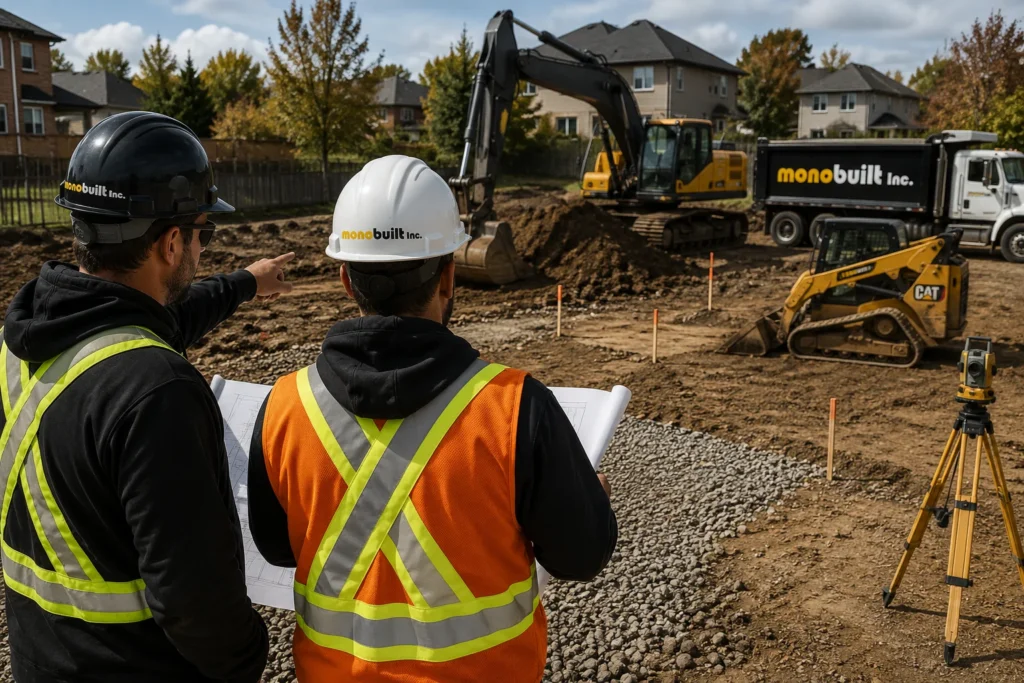
A successful building project starts long before the foundation is poured. Taking the time to follow a proper site preparation checklist, complete the required surveys and prepare the land correctly can help prevent delays, avoid unnecessary costs and give your project a strong start.
If you are looking for a trusted team, Monobuilt has 10+ years of experience providing professional site preparation, excavation, grading, trenching and foundation excavation services across Thornhill and the GTA. Our experienced operators, modern equipment and commitment to quality help keep projects safe, efficient and on schedule.
If you are building a custom home or a commercial property, we are here to help. Call us today at +1 (647) 404-0670 to discuss your project or request a free estimate.
Common Questions About Site Preparation in Thornhill
-
What is included in a site preparation checklist?
A site preparation checklist includes property surveys, soil testing, permits, utility locates, land clearing, excavation, grading, drainage planning and site inspections. Completing these steps before construction helps create a safe, stable building site and reduces the risk of delays, costly repairs and foundation problems.
-
How long does site preparation take before construction begins?
The timeline depends on the size of the property, site conditions, permits and the amount of excavation required. A simple residential project may take a few weeks, while larger or more complex sites can take longer. Planning ahead helps keep the project on schedule.
-
Do I need a permit before starting site preparation in Thornhill?
Yes. Most building projects in Thornhill require permits before excavation or other site work begins. The permits you need depend on the type of project and local municipal requirements. Always confirm approvals before starting construction to avoid delays or stop-work orders.
-
Why is soil testing important before excavation?
Soil testing shows whether the ground can safely support your building. It identifies soil strength, drainage conditions and groundwater levels, helping engineers and excavation contractors choose the right foundation and site preparation methods before construction begins.
-
Should I hire a professional site preparation contractor?
Yes. A professional contractor has the experience, equipment and local knowledge to complete site preparation safely and efficiently. They can manage excavation, grading, utility work and local requirements, helping reduce delays and giving your construction project a strong start.

Monobuilt Editorial Teams
The Monobuilt Editorial Team creates clear, reliable content about excavation and construction projects across Toronto and the GTA. Our articles are based on industry experience and reviewed by excavation professionals to help homeowners, builders, and contractors make informed decisions about site preparation, foundation excavation, grading, trenching, demolition, and heavy equipment services.